





Even when AI does the work, it’s people who determine how it’s done.
Which tool to use, in what order to proceed, If I fail, how can I try again? Until now, agent workflows have been designed by humans.
AI has even started to shape the way we work.
An Agent Designs an Agent
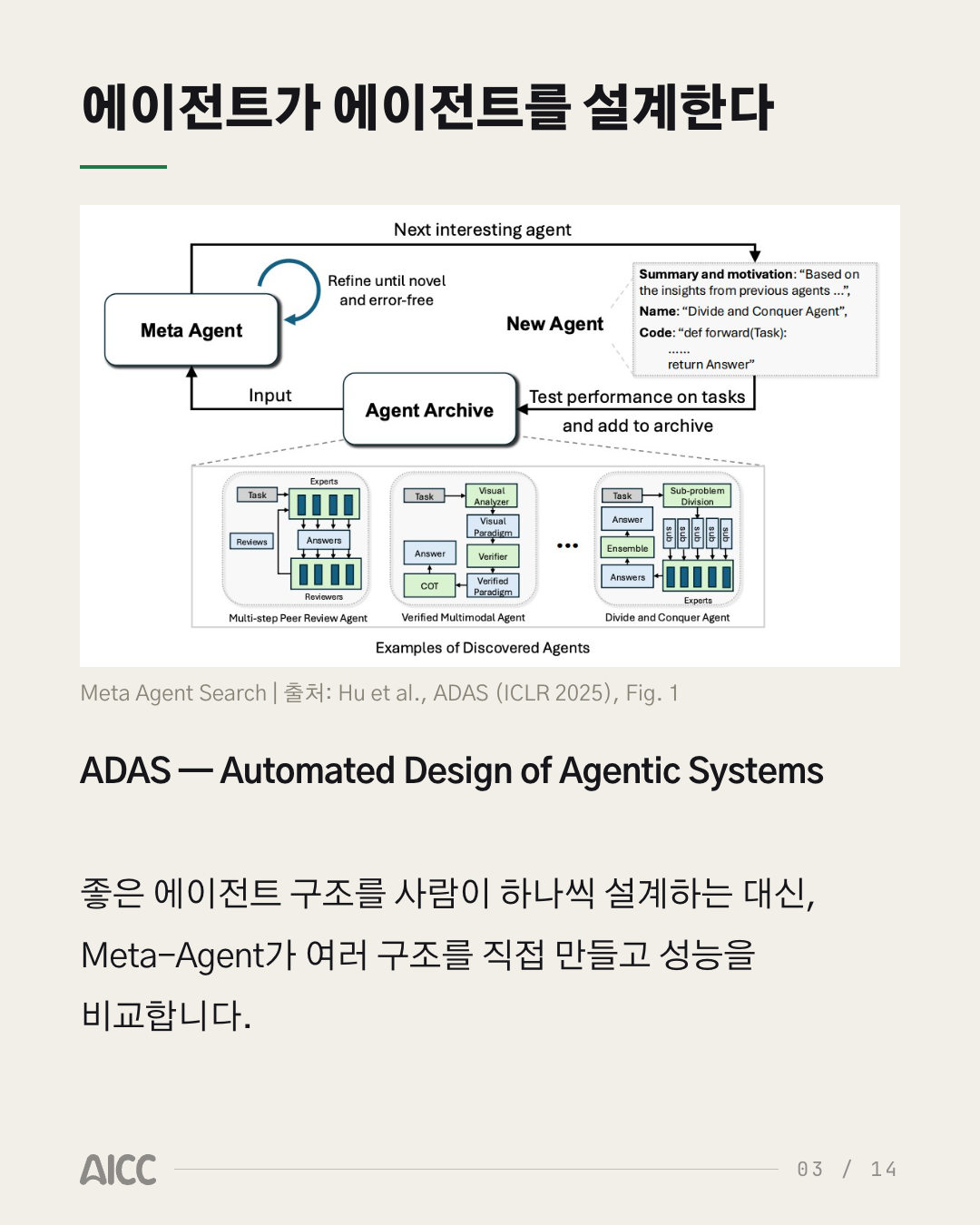
ADAS — Automated Design of Agentic Systems
Instead of having people design good agent architectures one by one, Meta-Agent directly creates various structures and compares their performance.
An agent designs an agent
How to use prompts and tools, By changing the roles and execution order of various agents, Generate → Evaluate → Save → Regenerate Repeat the process.
Designs that performed well are stored in the archive, and Meta-Agent, drawing on previously discovered structures, It creates another agent.
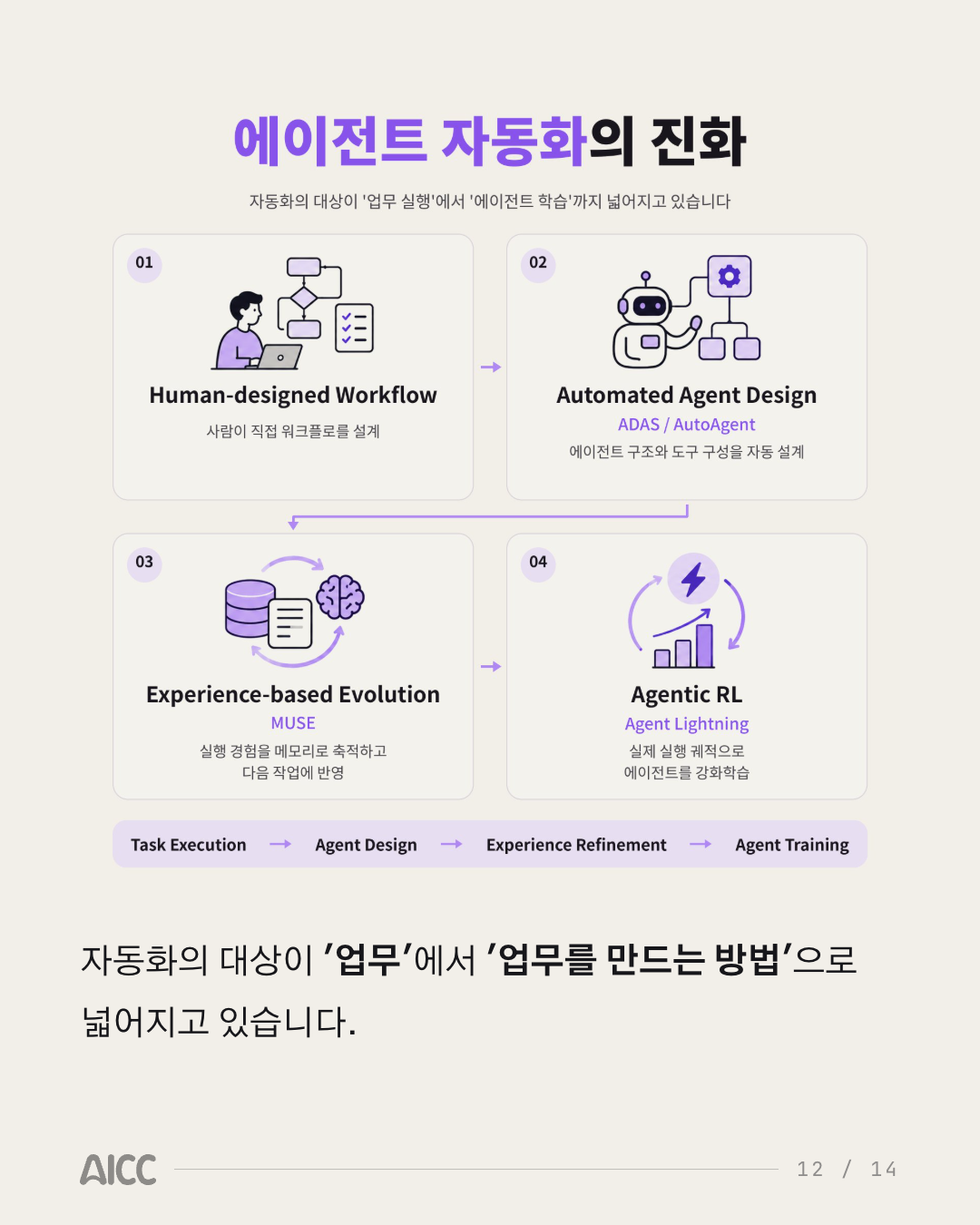
In other words, the scope of automation has shifted from simply “performing tasks” to In effect, this has expanded to include “designing the agents themselves that will perform the tasks.”
An AI-generated agent It has begun to serve as the raw material for creating the next agent.
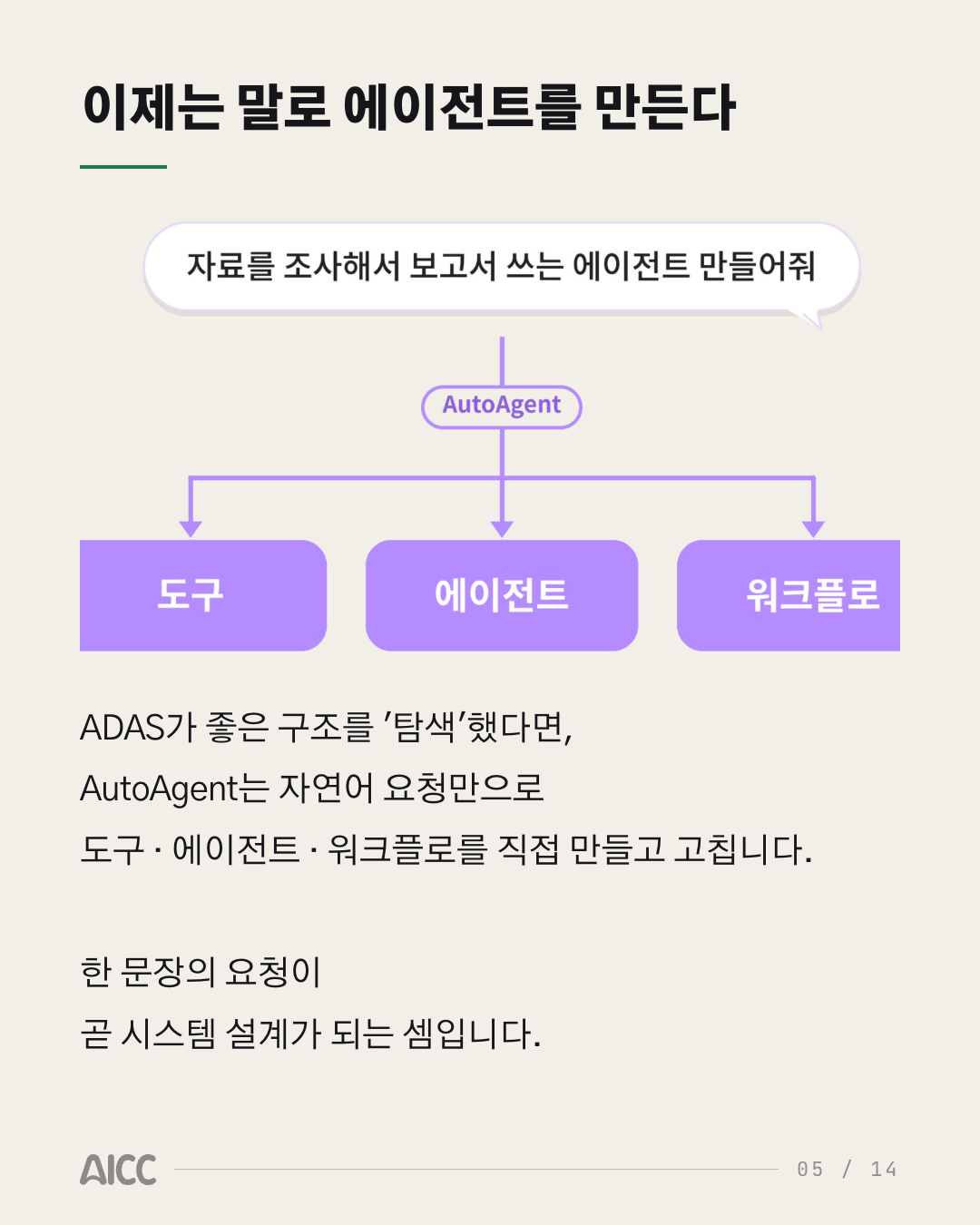
Now We Create Agents with Words
If ADAS has “detected” a good structure, AutoAgent can do this using only natural language requests Create and modify tools, agents, and workflows yourself.
A request in one sentence In other words, this amounts to system design.
Even once an agent has been created, it continues to learn
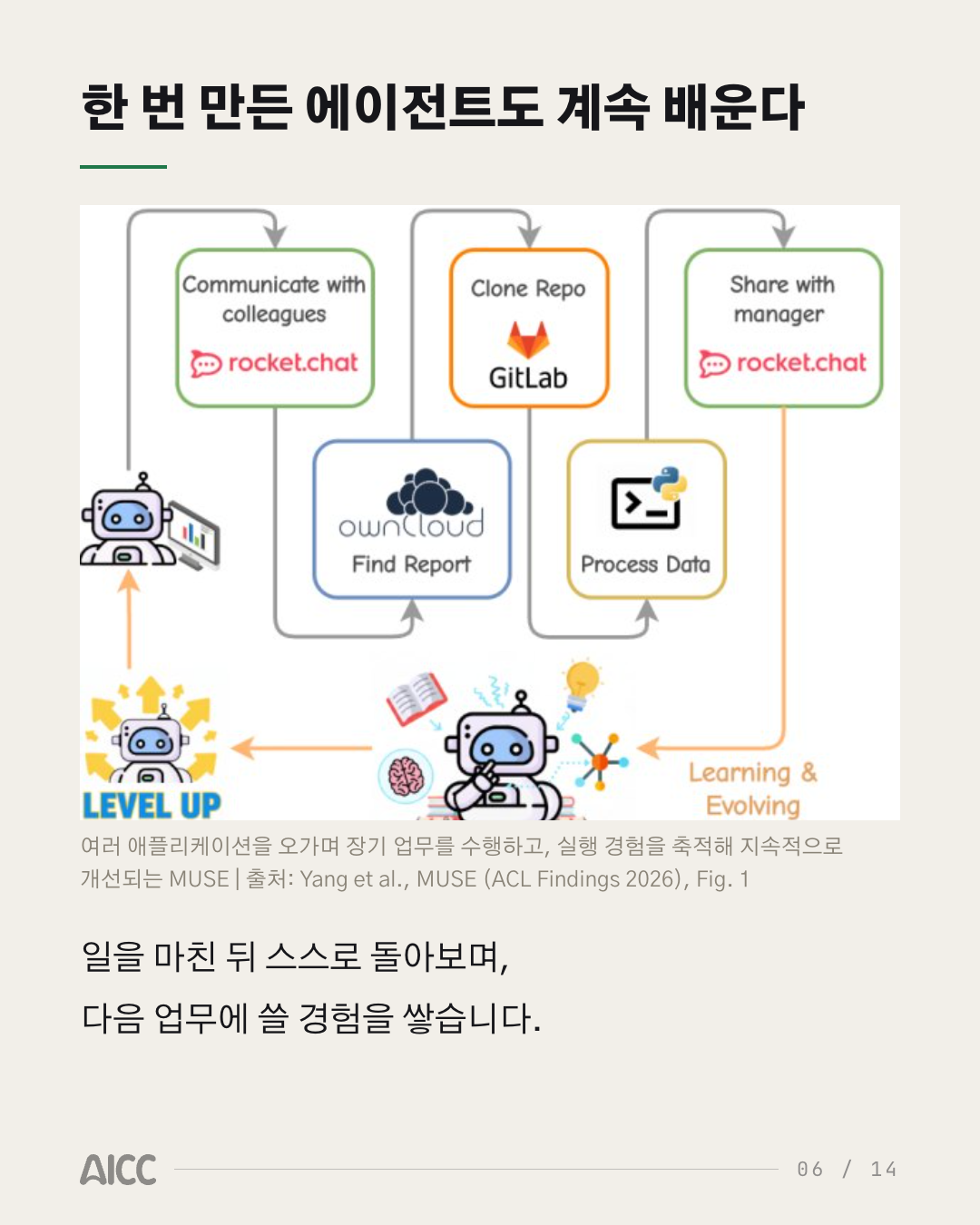
After finishing my work, I reflect on it, I’m gaining experience that will be useful for my next job.
Even after it’s been created, an agent continues to learn
After work is done, analyze the execution logs to Store strategies for success and causes of failure in your memory, and I’ll take it out and use it again for my next task.
When comparing demanding tasks performed by the same model, Let’s use the memory—the task completion score is It rose by about 10 percentage points.
Without having to retrain the model In a sense, that experience changed his subsequent actions.
This time, we’ll train the model itself
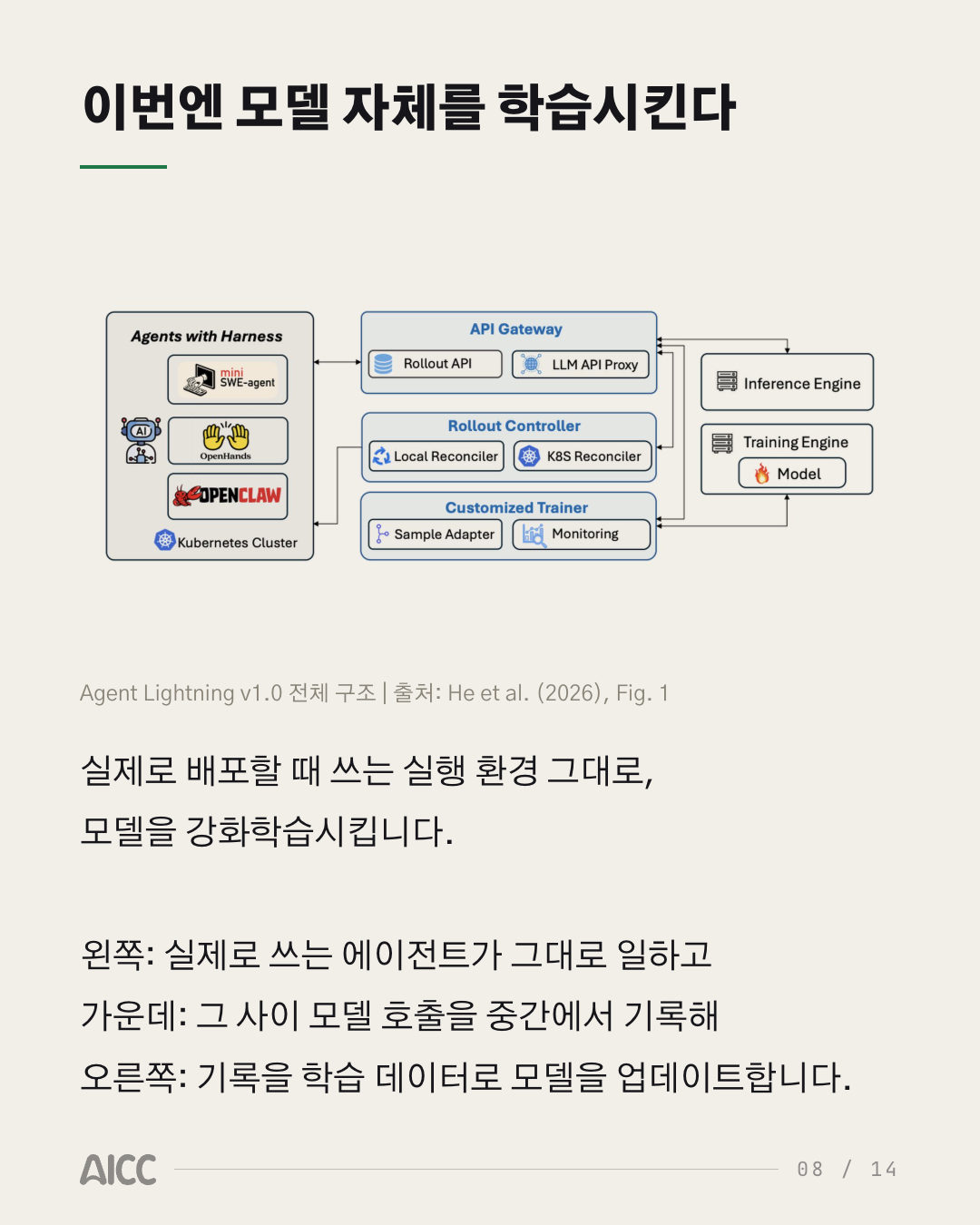
Exactly as it is in the runtime environment used for actual deployment, Train the model using reinforcement learning.
Left: The agents actually on the job continue working as usual, Center: Log the model calls in the middle Right: Updates the model using the records as training data.
This time, we’re training the model itself.
In traditional reinforcement learning, agents had to be rebuilt for training, which led to the problem that the environment used for training differed from the one used in actual operation.
If MUSE had stored its experiences in memory, Agent Lightning, based on real-world experience, Update the model itself.
Model Used for Training: Qwen3.5-9B Coding Environment: mini-SWE-agent
Based on the results of training with approximately 6,000 samples, Resolution Rate for GitHub Bug Fix Issues (SWE-bench Verified) 41.8% → ==56.4%== (+14.6 percentage points)
But what happens when you actually assign them work?
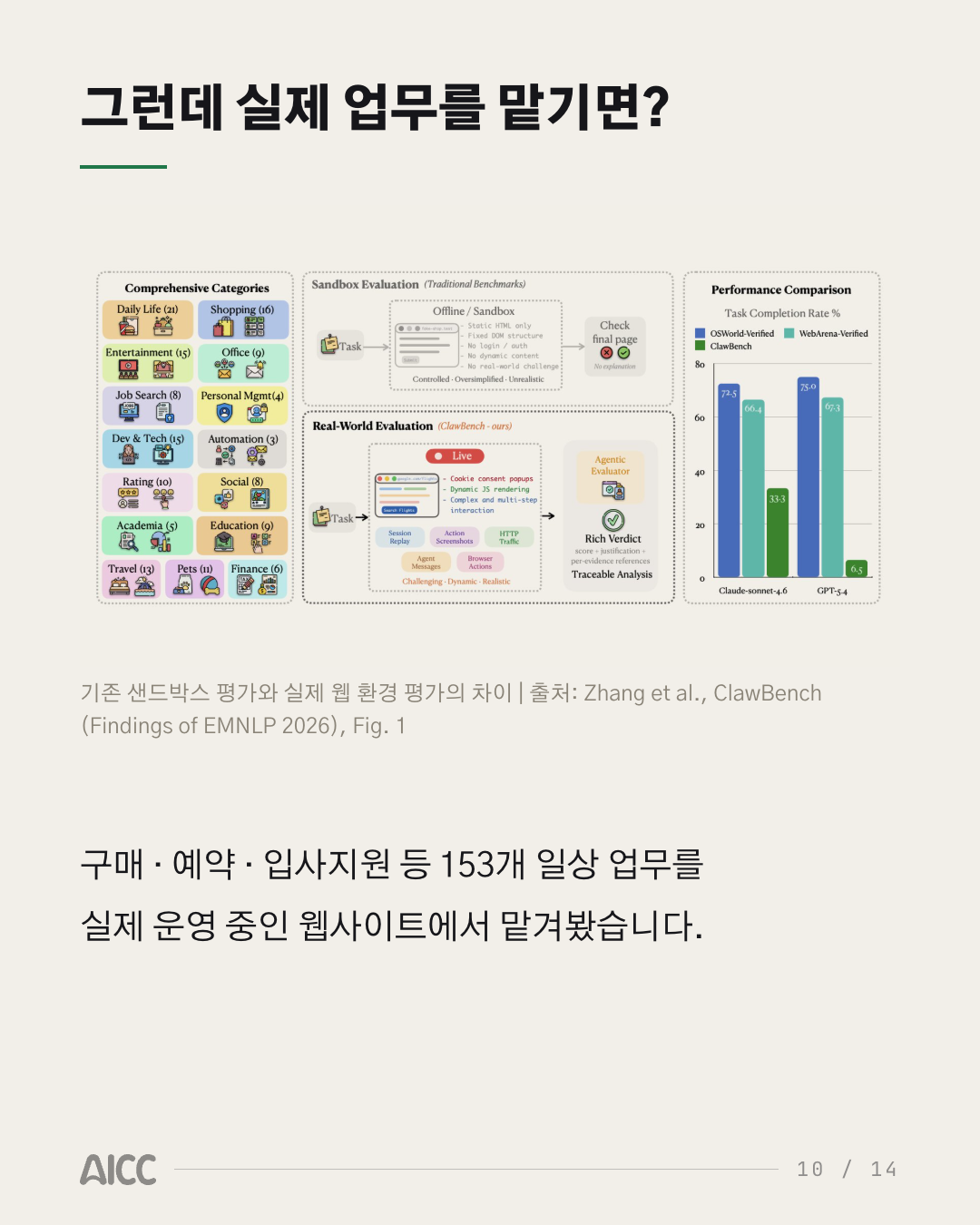
153 everyday tasks, such as shopping, making reservations, and applying for jobs, I tested it on a live website.
But what happens when you actually assign them work?
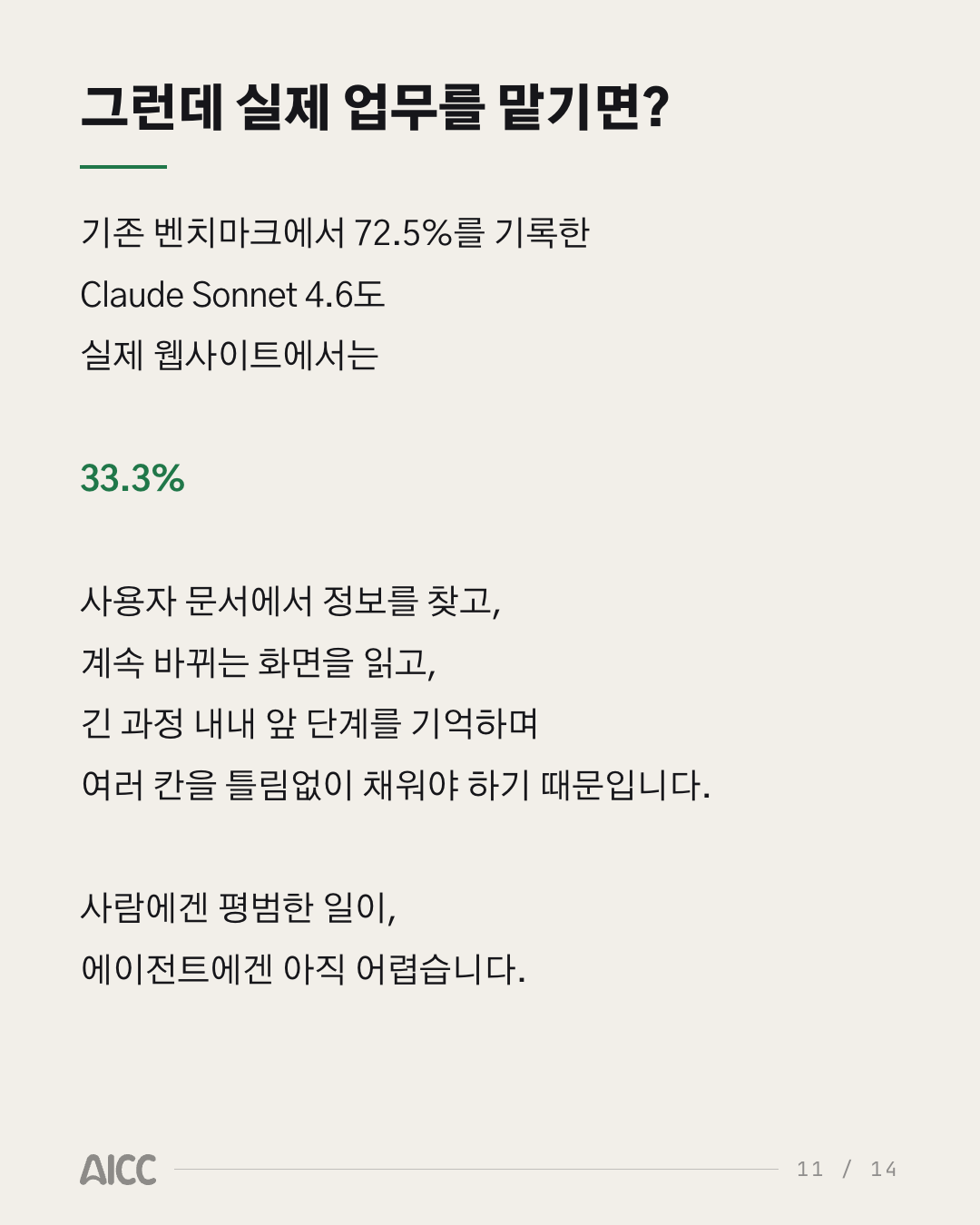
which scored 72.5% in previous benchmarks Claude Sonnet 4.6° On the actual website,
==33.3%==
Find information in the user documentation, and Reading the constantly changing screen, Throughout this long process, keeping the previous steps in mind This is because you must fill in several boxes.
What may seem ordinary to some, It’s still too difficult for the agent.
The scope of automation is expanding from ‘tasks’ to ‘how tasks are created’.
However, autonomy does not necessarily mean reliability.
Now the question is From “Can AI Do This?” “How much can it improve on its own with minimal intervention?” Things are changing.
The next step in AI automation is ==This might be the automation of “How to Automate Work.”==
Tags
- #artificial-intelligence
- #ai-papers